Black mold removal — what it is, and what takes it out
Colour does not tell you the species, and the species does not change the work. Here is what removes it.
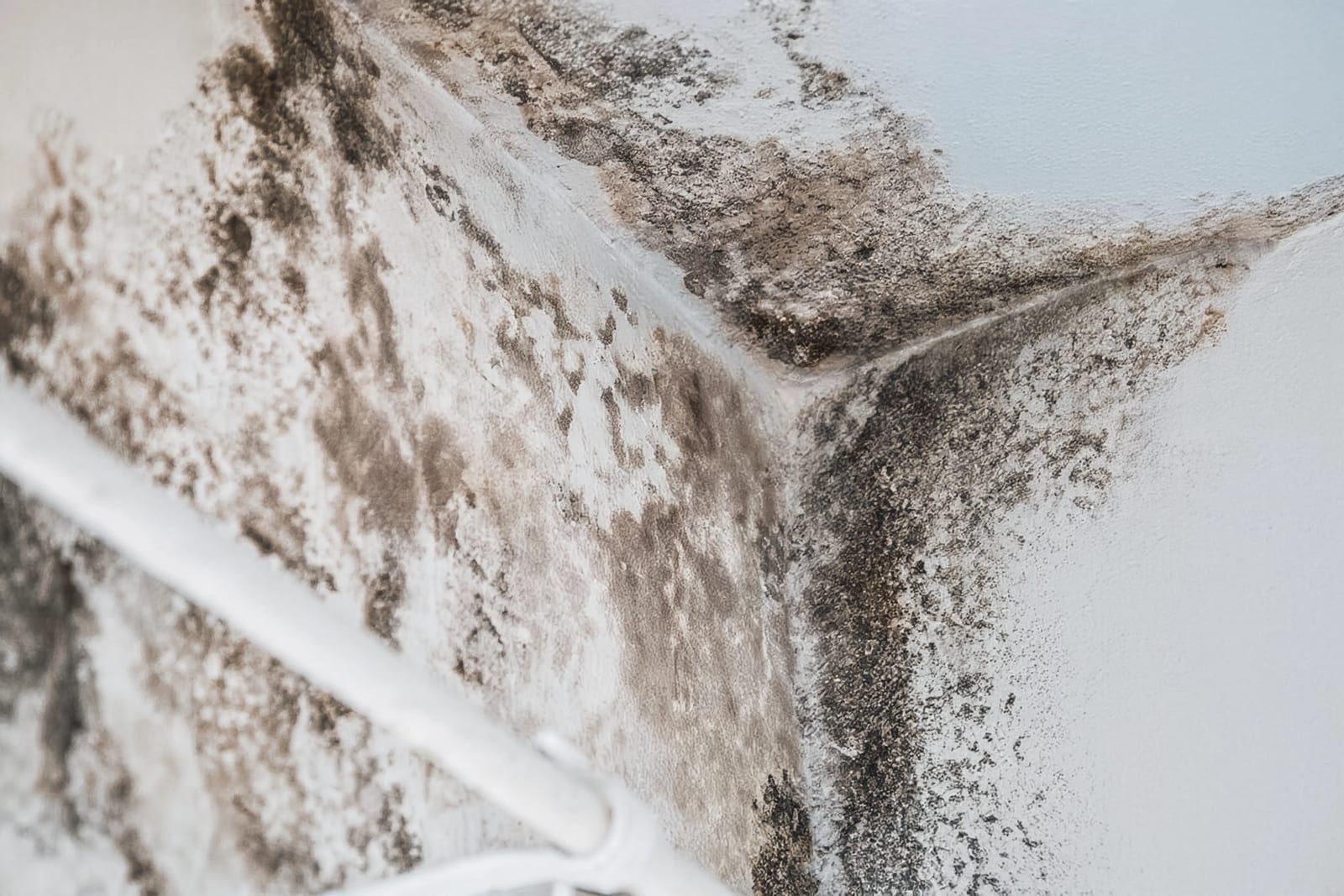
Dark growth spreading from a ceiling corner. The colour tells you the surface stayed wet, not the species.
What people mean by black mold
“Black mold” is not a scientific category. Most people using the phrase mean Stachybotrys chartarum, a dark greenish-black mold that turns up on paper-faced drywall, ceiling tile and other cellulose that has stayed wet for days rather than hours. Plenty of ordinary indoor molds are dark too: several Cladosporium, Alternaria and Aspergillus species.
Which leads to the useful part. You cannot identify mold by looking at it, and CDC's position is that you do not have to: if you can see it or smell it, deal with it. The removal is the same whatever a lab would call it. Everything below is how that gets done.
Three things you have read, and what is actually true
What you have read
“Black mold is a specific thing you can recognise.”
What is actually true
Colour is not an identification. Several common indoor molds grow dark, and each changes appearance with the material it is on and how long that has been wet. A laboratory can name it. Your eyes cannot, and neither can ours.
What you have read
“You need to know the species before anything is done.”
What is actually true
CDC guidance goes the other way: routine sampling is not recommended, because the answer does not change the response. What decides the work is how much there is, what it grows on, and where the water came from.
What you have read
“Bleach kills black mold.”
What is actually true
On a hard, non-porous surface bleach takes the stain off. On drywall or framing the water soaks in and the growth below survives — and the colour disappearing is what convinces people it worked. Three weeks later it is back.
What is actually known about the health side
Damp buildings and indoor mold growth are associated with respiratory symptoms: coughing, wheezing, and irritation of the eyes, skin, nose and throat. In people with asthma or a mold allergy, exposure can trigger symptoms. That is the EPA and CDC position, and reason enough to deal with a wet wall.
Past that point, be careful what you read. A great deal of material online attributes a long list of specific illnesses to one species of mold, and the evidence does not support it. We are a remediation contractor: we take out the growth, dry the structure and find the leak. We cannot tell you what it did to anyone's health, and nor can anybody who has not examined them. If someone is unwell, that conversation belongs with a physician.
What removing it actually involves
1
Find the water first
Nothing else is worth starting until the source is found. Growth on a wall is the last stage of a water problem, and a wall that gets wet again grows again however well it was cleaned.
2
Seal the room off
Sheeting up, seams taped, doorways closed, negative air pulling the work area through a HEPA filter so what comes off the wall leaves the building instead of settling in the hallway. This is most of why remediation costs more than a clean.
3
Take out what cannot be cleaned
Porous material grown through — drywall, insulation, carpet pad, ceiling tile — comes out and is bagged inside the containment. It is cut back to sound material, not scrubbed and painted over.
4
Clean what stays
Framing and other hard surfaces are HEPA-vacuumed and damp-wiped, then treated with an EPA-registered product where appropriate. Never dry-brushed or sanded without capture — that is how one wet wall becomes a whole-house problem.
5
Dry the cavity to a reading
Air movers and dehumidifiers run until a meter says the structure is dry, not until it looks dry. The readings are dated and written down, and you see them before anything closes up.
6
Fix the cause, then rebuild
The supply line, the grade against the foundation, the bath fan venting into the attic. It goes in the report whether or not we repair it — that repair is what stops this being an annual job.
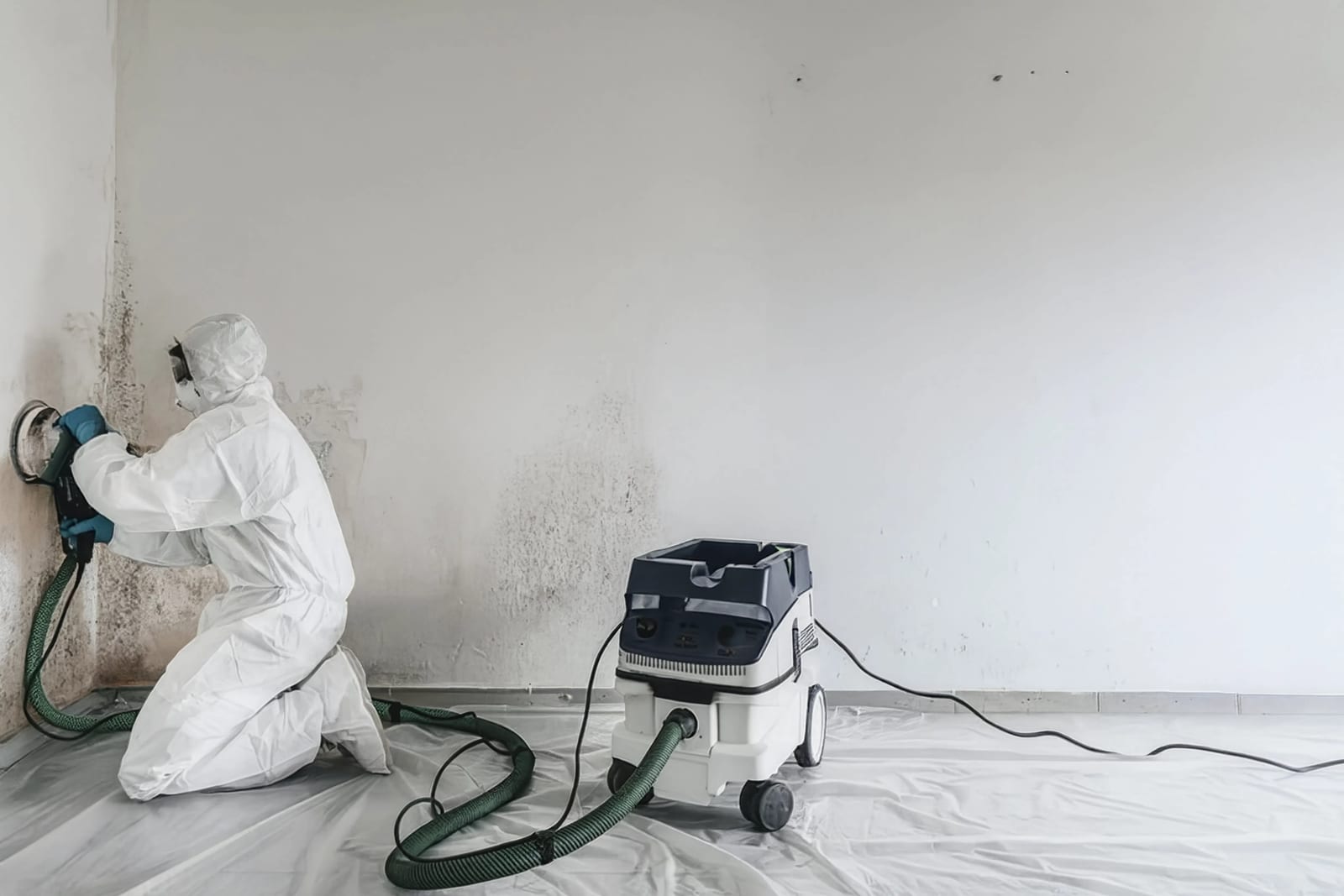
Working a wall back to sound material with capture at the tool. Nothing is taken off dry.
What decides the price
Black mold removal is priced on the work, not on the word. What moves the number: how much affected material there is, whether it sits in a wall cavity, a crawl space, an attic or the HVAC, how much comes out against how much is cleaned in place, how large a containment the room needs, how many days it takes to dry, and whether anything needs rebuilding.
We do not quote it down the phone. A price given before anyone has read a meter changes on the invoice. You are better off with the number from a free visual assessment, in any market we cover.
When you do not need a remediation crew
Under about ten square feet, do it yourself
A dark patch on bathroom grout, a window frame or a painted sill — under roughly three feet by three feet, on a hard surface with nothing wet behind it — is a job EPA says a homeowner can handle with detergent, water and ventilation. Running an air scrubber for a week is not the answer, and neither are we.
Call a crew when the growth is on or behind something porous, when it covers more than that patch, when it keeps returning, when it is in the HVAC, or when there has been standing water.
Questions we get asked
Is black mold more dangerous than other mold?
Not in a way that changes what you should do. Indoor mold growth of any kind can irritate eyes, skin, nose, throat and lungs, and can set off symptoms in people with asthma or a mold allergy. The CDC does not recommend routine sampling to identify a species, because the answer would not change the work.
How do I know it is black mold and not something else?
By looking, you cannot, and nor can anyone standing next to you. If you want it named, that is a laboratory test and a separate paid step; your technician will say whether it is worth the money.
Can I paint over it?
No. Mold-resistant paint stops growth starting on a surface that is already clean and dry. Over live growth it is a lid: the material underneath carries on breaking down, and the paint comes away with it.
Should we stay somewhere else while the work happens?
It depends on the size of the job, where it is and who lives there. Containment keeps the rest of the house usable, but a large job in a main living area, or somebody with asthma or a mold allergy, changes that. The crew will tell you which once they have seen it.