Mold inspection — and when testing is worth paying for
The walk-through, the moisture readings and the written estimate cost nothing. Lab testing is a separate paid step, and often not one you need.
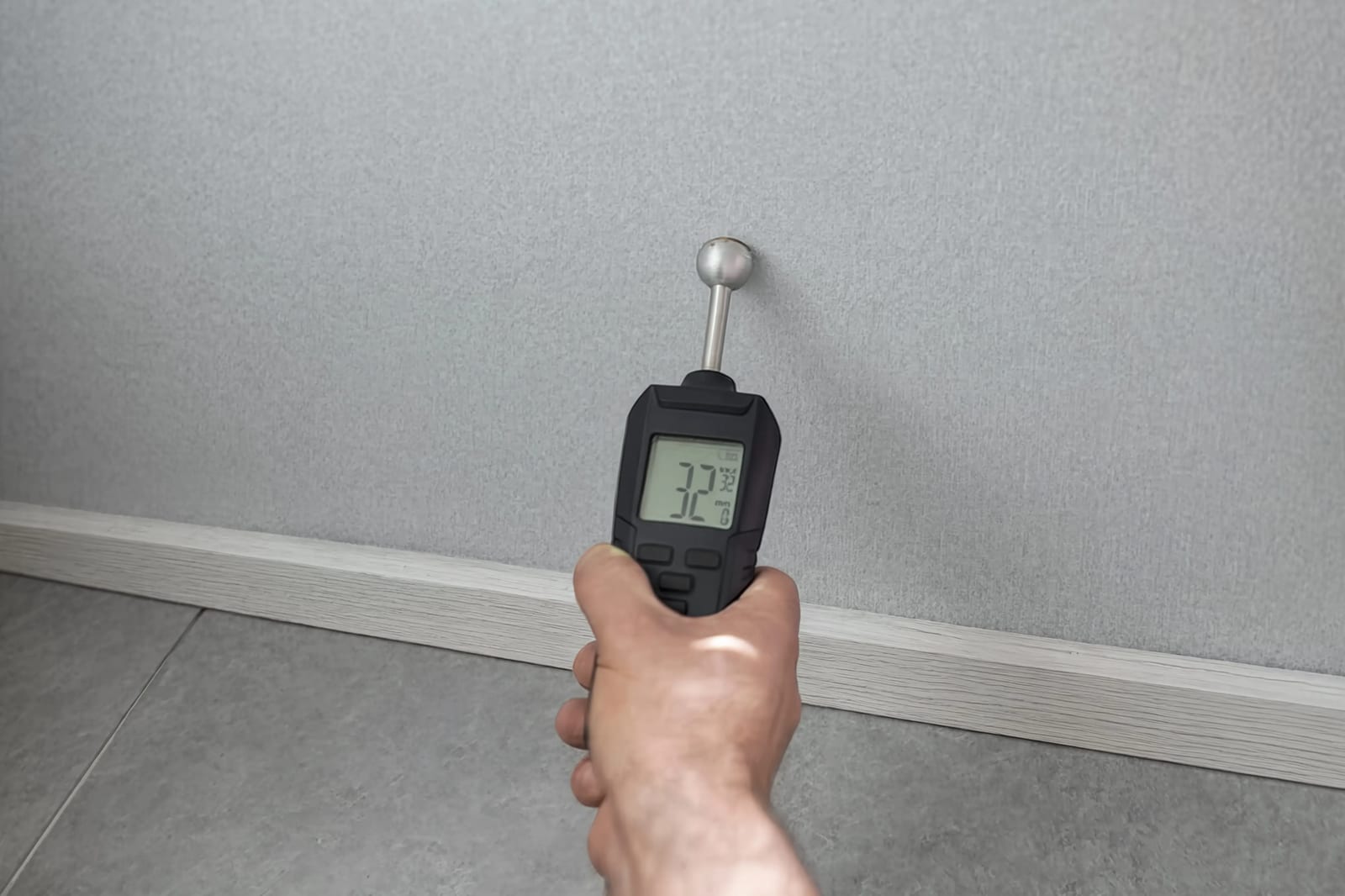
Reading moisture through the surface, above the baseboard, before anything is opened.
What a mold inspection actually is
A mold inspection is a person with a moisture meter and a light, answering two questions: where is the water getting in, and how far has it travelled. Most of what matters is not visible from the room — mold grows on the back of drywall, inside insulation and above ceiling tile, and by the time it shows on the painted side it has been there a while. If you are still working out whether the stain you are looking at is mold at all, settle that first; an inspection is the step after.
A home mold inspection from us is a visual assessment: the technician looks, measures, opens only what has to be opened, and leaves the findings and a written estimate. That costs nothing. Mold testing — samples sent to a lab to identify what is growing — is a separate paid step, and there are a few situations where it earns its money. Most of the time it does not: if you can see mold, you already know what decides the work.
Three things you will be told, and what is actually true
What you will hear
“It has to be tested before anyone can start.”
What is actually true
EPA guidance says sampling is not necessary when growth is visible. A laboratory result does not change what happens next: the wet material comes out and the water gets fixed.
What you will hear
“The spore count tells you how bad it is.”
What is actually true
There are no federal standards for acceptable indoor mold levels, so a count has nothing to measure against. The same room samples differently by the hour, by the season, and by whether a window was open.
What you will hear
“The inspection is the part you pay for.”
What is actually true
Not here. You pay for the work. The assessment, the readings and the estimate are how a crew scopes a job, and we would rather turn up and find nothing than charge you to be told that.
What the technician does on the visit
1
Asks before looking
Where did the water come from, how long has it been there, has anyone repaired it before, what does the room smell like shut up all day. History narrows the search faster than eyes do.
2
Reads moisture through the surface
A pin meter for a direct reading, a pinless one for scanning a wall, an infrared camera for the cold wet patch behind paint that looks perfect. This is where a clean-looking wall fails and a stained one turns out to be old and dry.
3
Opens only what has to be opened
If the meter says a cavity is wet, one small inspection cut answers the question. A section, not the room. You see what is behind it when the technician does.
4
Traces it back to the source
A supply line, a shower pan, a roof valley, ground sloping towards the house, a bath fan venting into the attic. The mold is the symptom; this is the cause, and it goes in the report whether or not we repair it.
5
Leaves it with you in writing
What was found, where, how wet, what putting it right involves and what it costs. One page for a plumber, a landlord, an adjuster or the next contractor.
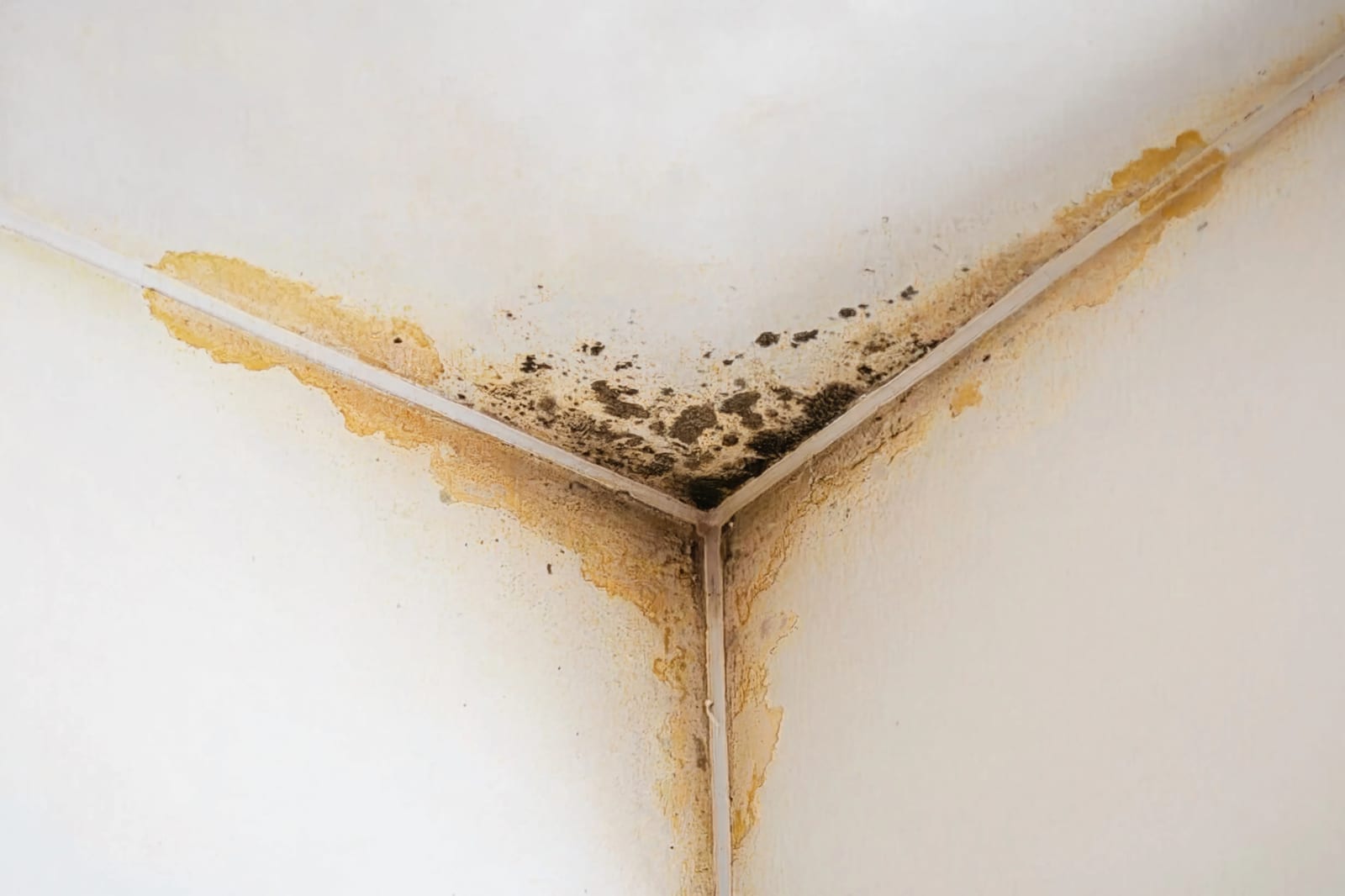
Visible growth with the water stain that fed it. A lab result would not change a thing about the work.
When lab testing earns its money
Four situations, and we tell you which one you are in before you spend anything.
You can smell it and nobody can find it. Meters dry, nothing visible, smell still there. Air sampling can point at which room to open up.
A physician has asked for it, while assessing someone in the house for an allergy or asthma trigger.
Somebody else needs an independent number — a sale, a lease dispute, an insurance claim. A third party will not take our word, or yours.
Clearance after a large job: post-work sampling documents that the area came back to normal levels before it was closed up.
What a mold inspection costs
The visual assessment is free in every market we cover. No call-out fee, no charge for the estimate, no obligation attached to either.
Laboratory work is priced per sample plus the lab's fee, and a house needs several samples to mean anything. Your technician quotes it before anything is collected.
What moves the remediation estimate is different: how much material is affected, whether it sits in a wall cavity, a crawl space or an attic, how much comes out against how much can be cleaned in place, and how many days the structure needs to dry. A firm price for mold removal quoted down the phone, before a meter has touched anything, is a guess.
When you should not call us
Under about ten square feet, do it yourself
A dark patch on bathroom grout, a window frame or a painted sill — under roughly three feet by three feet, on a hard surface with nothing wet behind it — is a job EPA says a homeowner can handle with detergent, water and ventilation. Fix the airflow and it stays gone.
Mildew on tile is not a remediation project, and a company that tells you it is has told you something useful about itself. Call a crew when the patch is bigger, when it is on or behind something porous, when it keeps coming back, or when there has been standing water.
Questions we get asked
Is the inspection really free?
Yes. The visual assessment, the moisture readings, the findings and the written estimate cost nothing. What costs money is laboratory work, if you want it, and the remediation itself.
Do I need a mold test before you can quote the job?
No. Visible growth plus a moisture source is enough to scope and price the work. Sampling helps in the opposite case: the mold is hidden, the meter finds no water, and the smell will not go.
What is the difference between an inspection and an air-quality test?
An inspection looks for water and growth in the building. An air sample counts spores in one room at one moment. The first tells you what to do; the second is a snapshot, which is why two labs can hand you different answers from one house in one afternoon.
Can you tell what kind of mold it is by looking at it?
No, and neither can anyone else. Colour does not identify a species. It also rarely matters, because black mold removal follows the same procedure as any other kind.
Will my insurance pay for it?
That depends on the cause rather than the mold. Sudden accidental water — a burst supply line — is often covered; a slow leak that ran for months usually is not. We put the cause in writing, the first document an adjuster asks for.